Quick Verification Based on Existing Demos
Before learning USB or CherryUSB code, we need to quickly verify based on existing demos. Why? To enhance interest in USB and build confidence for the next steps. If demos can’t run, or if you explore writing code by yourself, or read USB basic concepts first, you may find that you can’t understand anything in the end - there are so many concepts that you simply can’t remember them, thus losing interest in USB. Therefore, running demos first is very important. Below I will list the currently supported demo repositories.
Based on Bouffalolab Series Chips (Official SDK Support)
Repo url |
USB IP |
Version |
|---|---|---|
FOTG210 |
less than latest |
Based on HPMicro Series Chips (Official SDK Support)
Repo url |
USB IP |
Version |
|---|---|---|
CHIPIDEA |
less than latest |
Based on esp32s2/s3/p4 Series Chips (Official SDK Support)
Repo url |
USB IP |
Version |
|---|---|---|
DWC2 |
less than latest |
Default demo uses component library installation form, can be searched at https://components.espressif.com/ for cherryusb
ESP-Registry can refer to the official documentation, recommended to use vscode + esp-idf development environment.
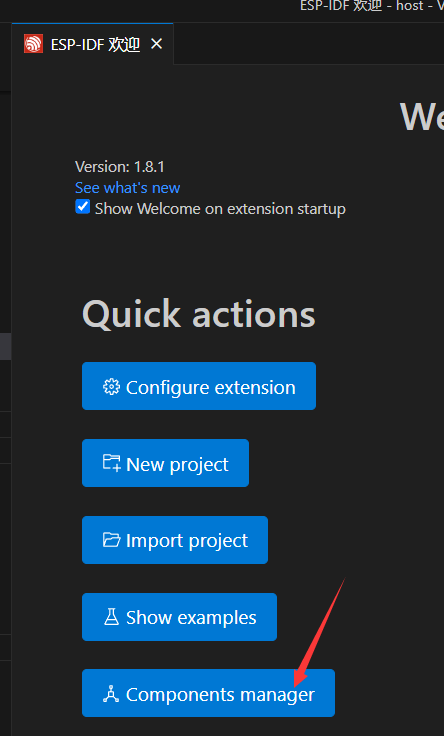
ctrl + shift + p select ESP-IDF welcome interface, then select Component manager
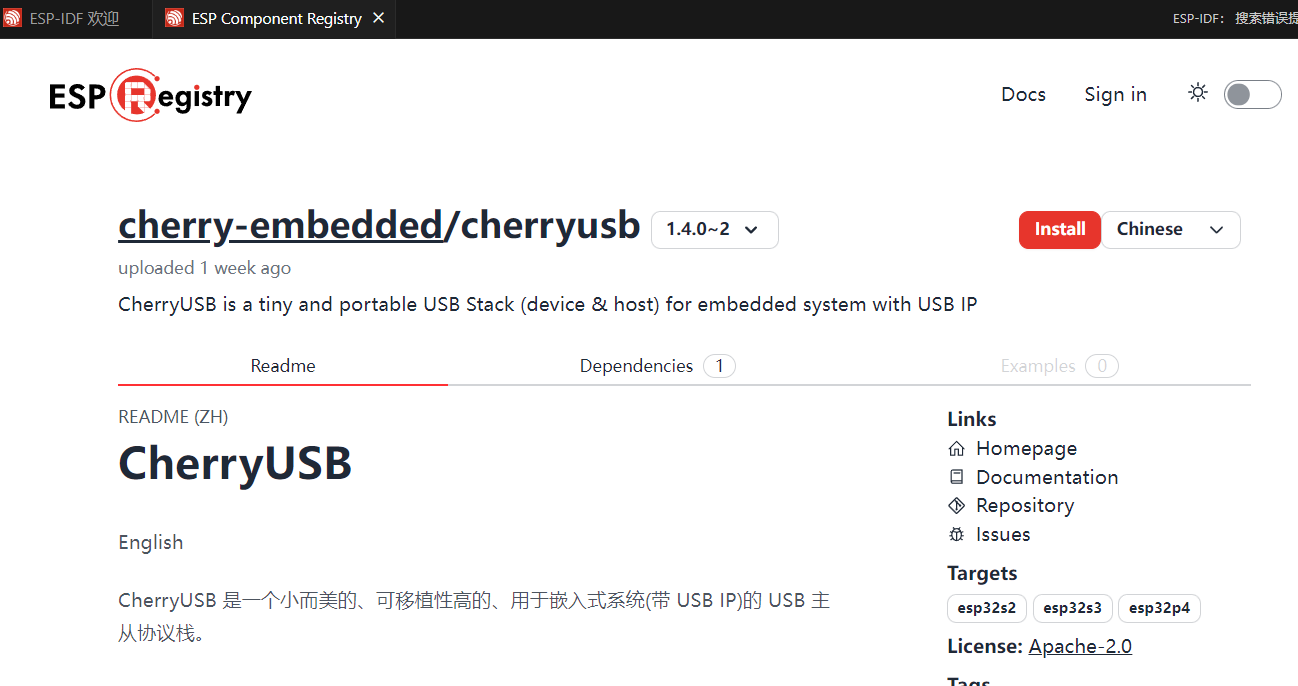
Find cherryusb and install
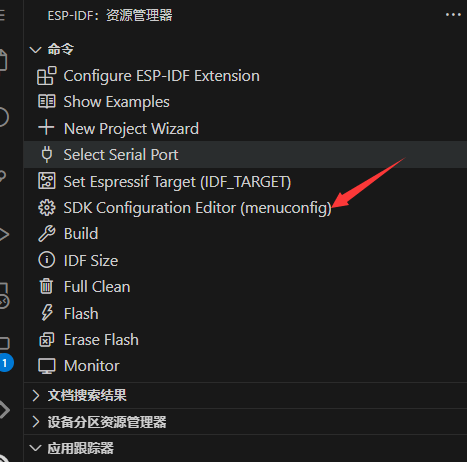
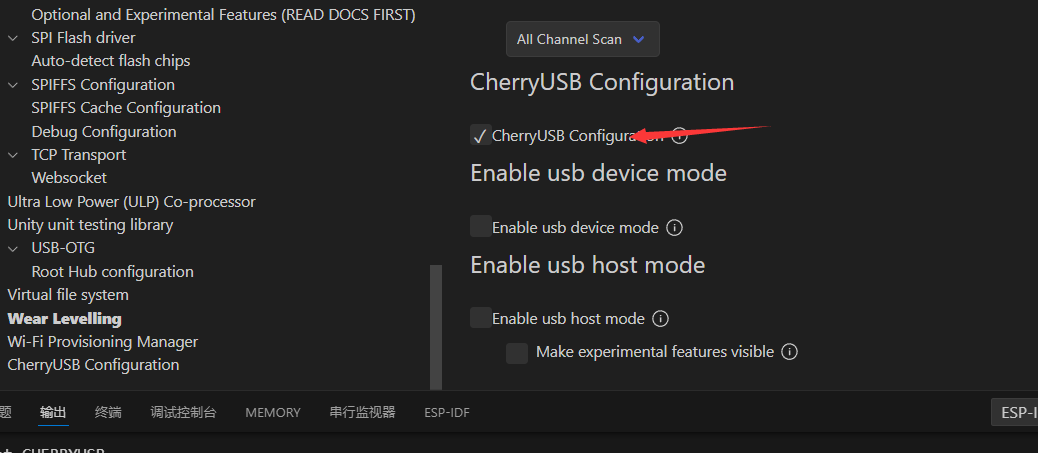
Open menuconfig, and open cherryusb configuration, select host or device mode according to actual situation
Based on Phytium Series Chips (Official SDK Support)
Repo url |
USB IP |
Version |
|---|---|---|
PUSB2/XHCI |
equal to v1.4.0 |
Based on Essemi Series Chips (Official SDK Support)
Repo url |
USB IP |
Version |
|---|---|---|
MUSB |
less than latest |
Based on Artinchip Series Chips (Official SDK Support)
Repo url |
USB IP |
Version |
|---|---|---|
AIC/EHCI/OHCI |
less than latest |
Based on Kendryte canmv-k230 Chip (Official SDK Support)
Repo url |
USB IP |
Version |
|---|---|---|
DWC2 |
less than latest |
Based on NXP MCX Series Chips
Repo url |
USB IP |
Version |
|---|---|---|
https://github.com/CherryUSB/cherryusb_mcx https://github.com/RT-Thread/rt-thread/tree/master/bsp/nxp/mcx |
CHIPIDEA/kinetis |
less than latest |
Based on SiFli SF32 Series Chips (Official SDK Support)
Repo url |
USB IP |
Version |
|---|---|---|
MUSB |
less than latest |
Based on RP2040/RP2035 Chips (Official SDK Support Coming Soon)
Repo url |
USB IP |
Version |
|---|---|---|
https://github.com/CherryUSB/pico-examples https://github.com/CherryUSB/pico-sdk |
RP2040 |
less than latest |
Based on Actionstech Series Chips (Official SDK Support)
Not opensource, please contact to Actionstech official
Based on ST Series Chips
Repo url |
USB IP |
Version |
|---|---|---|
DWC2/FSDEV |
less than latest |
Default demo projects provided:
F103 uses fsdev ip
F429 host and device use USB1, pins pb14/pb15, default device does not enable DMA mode
H7 device uses USB0, pins pa11/pa12, DMA mode not enabled. Host uses USB1, pins pb14/pb15, and needs nocache processing
Demo provides stm32xxx.ioc file, double click to open, click Generate Code.
Caution
After generation, please use git reset function to restore the overwritten main.c and stm32xxx_it.c files, prohibit being overwritten by cubemx.
Covers F1/F4/H7, other chips are basically similar and won’t be repeated. Specific differences are:
usb ip difference: F1 uses fsdev, F4/H7 use dwc2
dwc2 ip difference: USB0 (pins PA11/PA12) and USB1 (pins PB14/PB15), where USB1 defaults to full-speed, can connect external PHY to form high-speed host, and has DMA functionality
F4 has no cache, H7 has cache
If it’s STM32F7/STM32H7 with cache functionality, you need to locate the ram used by usb to the no cache ram area. Example as follows
cpu_mpu_config(0, MPU_Normal_NonCache, 0x24070000, MPU_REGION_SIZE_64KB);
Corresponding sct script modification in Keil:
LR_IROM1 0x08000000 0x00200000  {    ; load region size_region
ER_IROM1 0x08000000 0x00200000  {  ; load address = execution address
*.o (RESET, +First)
*(InRoot$$Sections)
.ANY (+RO)
.ANY (+XO)
}
RW_IRAM2 0x24000000 0x00070000  {  ; RW data
.ANY (+RW +ZI)
}
USB_NOCACHERAM 0x24070000 0x00010000  {  ; RW data
*(.noncacheable)
}
}
USB Device Porting Points
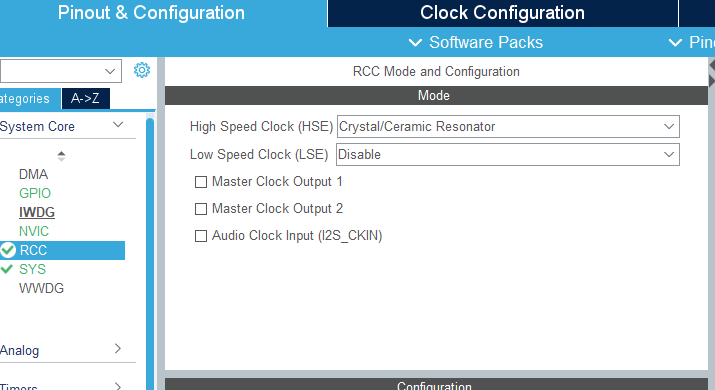
Use stm32cubemx to create project, configure basic RCC, UART (used as log)
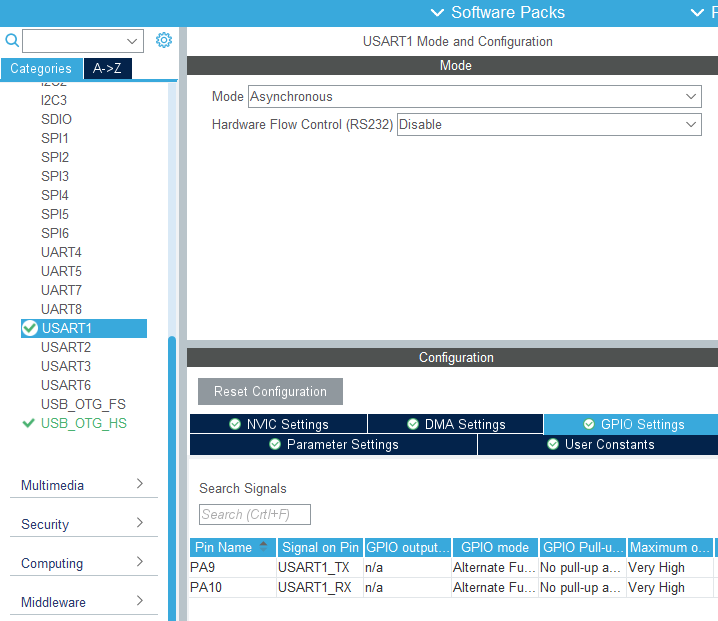
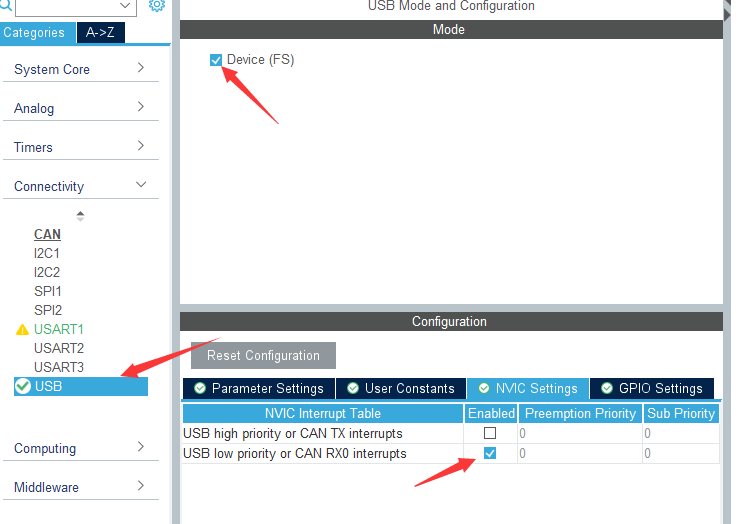
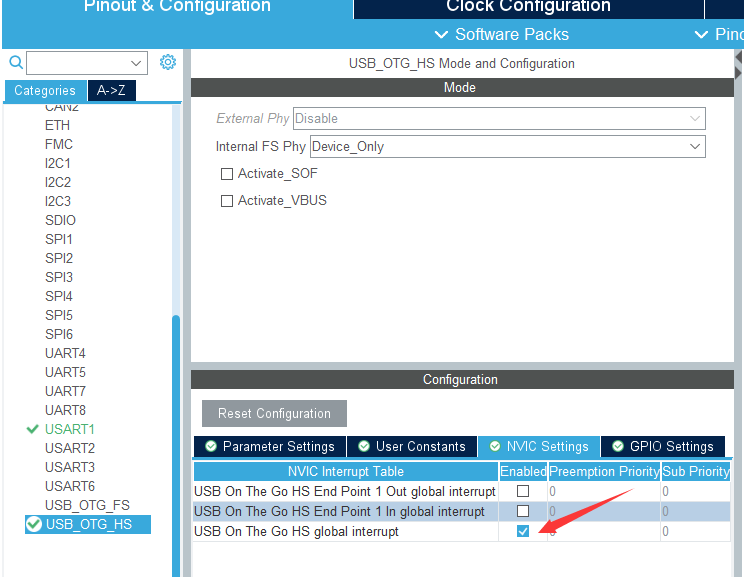
If using fsdev ip, check USB. If using dwc2 ip, check USB_OTG_FS or USB_OTG_HS. Enable USB interrupt. Other configurations are useless to us, no ST USB library will be used in the code.
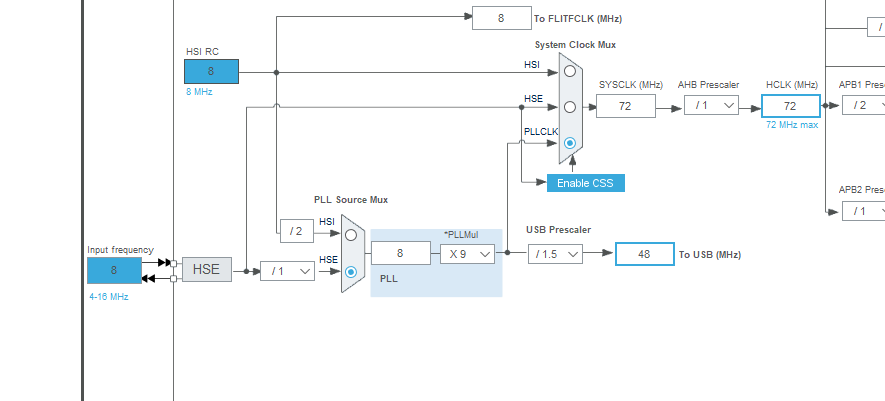
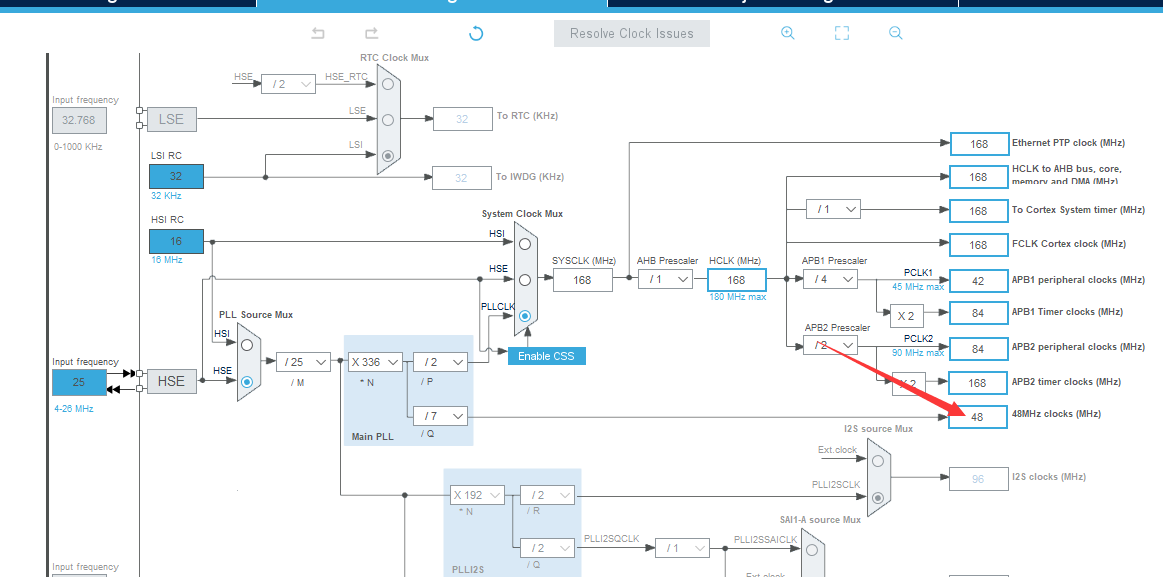
Configure usb clock to 48M
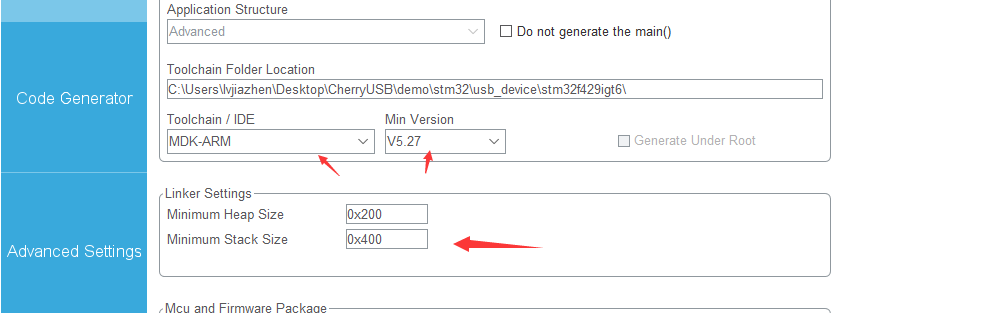
Select project, here we choose keil, set stack and heap properly. If using msc, it’s recommended to set them larger, then click Generate Code.
Add CherryUSB required source code (usbd_core.c, dwc2/usb_dc_dwc2.c or fsdev/usb_dc_fsdev.c), as well as the class drivers you want to use. You can add corresponding class templates for convenient testing.
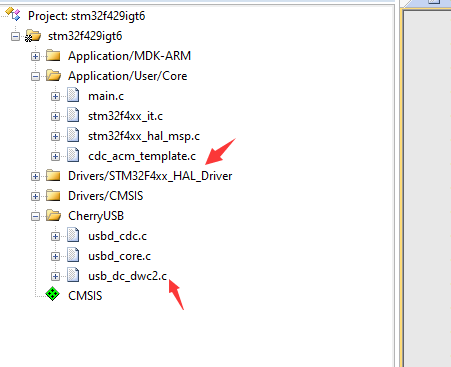
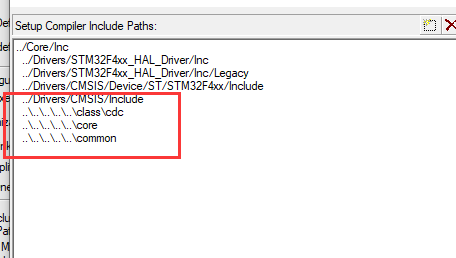
Add necessary header files
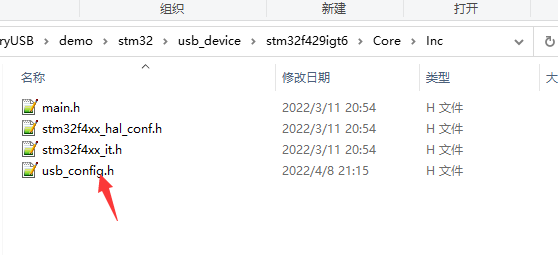
Copy cherryusb_config_template.h, place it in the Core/Inc directory, and name it usb_config.h
If using fsdev ip, (starting from V1.5.0, need to add fsdev/usb_glue_st.c) implement the following macro definition in usb_config.h. The specific value varies for different chips:
#define CONFIG_USBDEV_FSDEV_PMA_ACCESS 2
Compiler recommends using AC6. Check Microlib, and implement printf for convenient log viewing later.
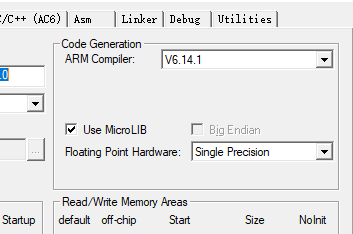
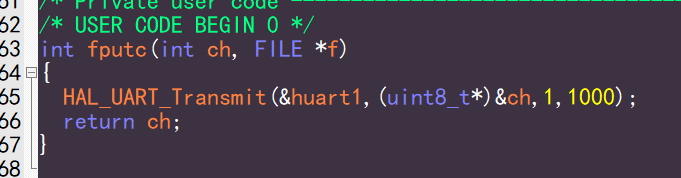
Note
Starting from V1.5.0, the following two steps are no longer needed because they are already implemented in fsdev/usb_glue_st.c and dwc2/usb_glue_st.c files
Copy the content of HAL_PCD_MspInit function in xxx_msp.c to usb_dc_low_level_init function, disable ST generated USB initialization
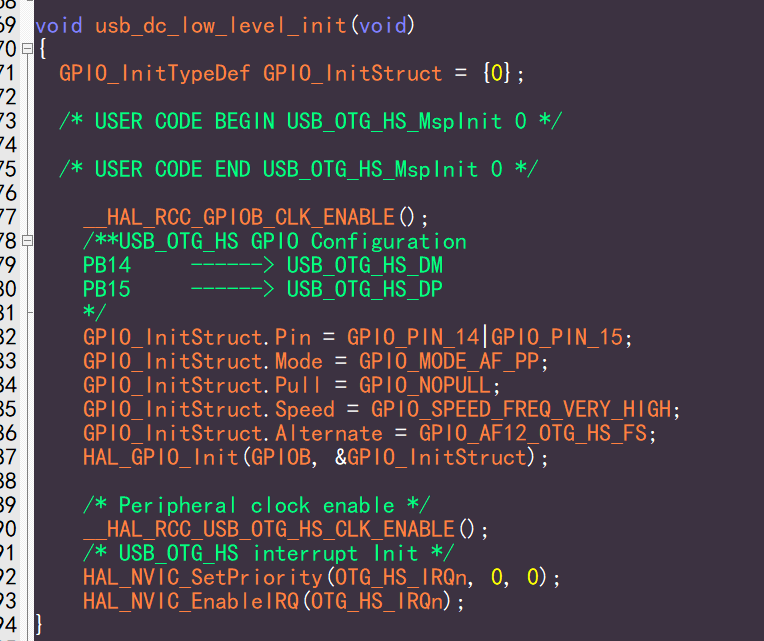
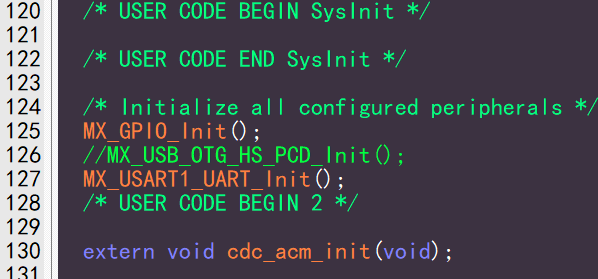
Call USBD_IRQHandler in interrupt function and pass in busid
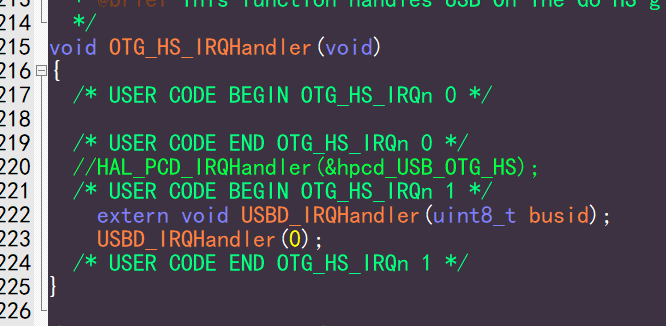
If the chip has cache, please refer to cache Configuration Modification chapter for cache modification
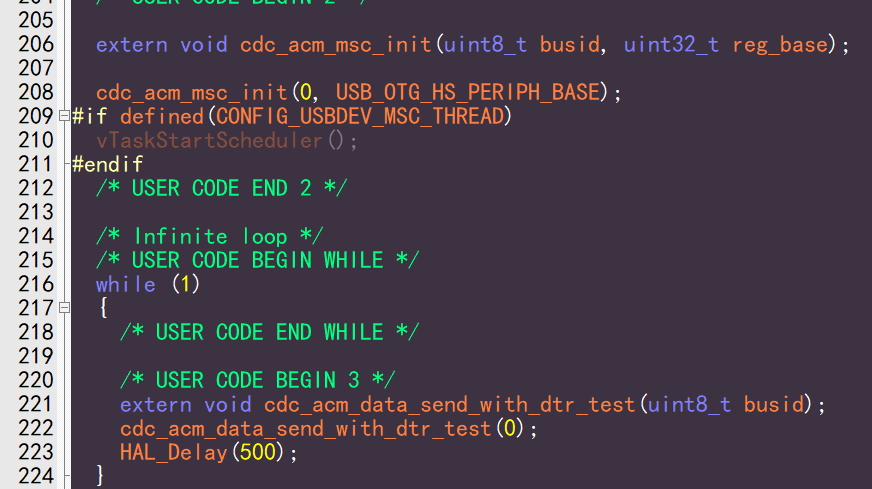
Call template content initialization and fill in busid and USB IP’s reg base. busid starts from 0 and cannot exceed CONFIG_USBDEV_MAX_BUS
USB Host Porting Points
The first 6 steps are the same as device side. Note that host driver only supports HS port with DMA (pins PB14/PB15), so FS port (pins PA11/PA12) is not supported (what’s the point of a host without DMA).
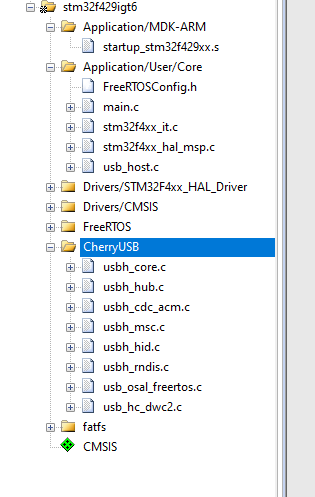
Add CherryUSB required source code (usbh_core.c, usbh_hub.c, usb_hc_dwc2.c, usb_glue_st.c and adapter layer files in osal directory), as well as the class drivers you want to use, and you can add corresponding usb host.c for convenient testing.
Compiler recommends using AC6. Check Microlib, and implement printf for convenient log viewing later.
Copy cherryusb_config_template.h, place it in the Core/Inc directory, and name it usb_config.h
Note
Starting from V1.5.0, the following two steps are no longer needed because they are already implemented in fsdev/usb_glue_st.c and dwc2/usb_glue_st.c files
Copy the content of HAL_HCD_MspInit function in xxx_msp.c to usb_hc_low_level_init function, disable ST generated USB initialization
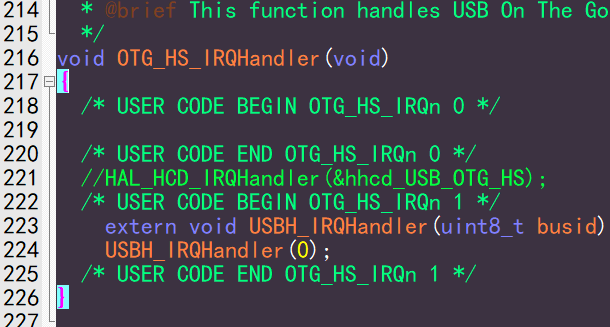
Call USBH_IRQHandler in interrupt function and pass in busid
For linker script modifications, refer to Host Linker Script Modifications chapter
If the chip has cache, please refer to cache Configuration Modification chapter for cache modification
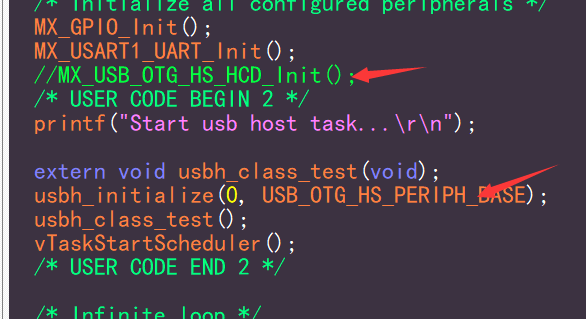
Call usbh_initialize and fill in busid and USB IP’s reg base and event_handler (can be omitted as NULL). busid starts from 0 and cannot exceed CONFIG_USBHOST_MAX_BUS
Start thread